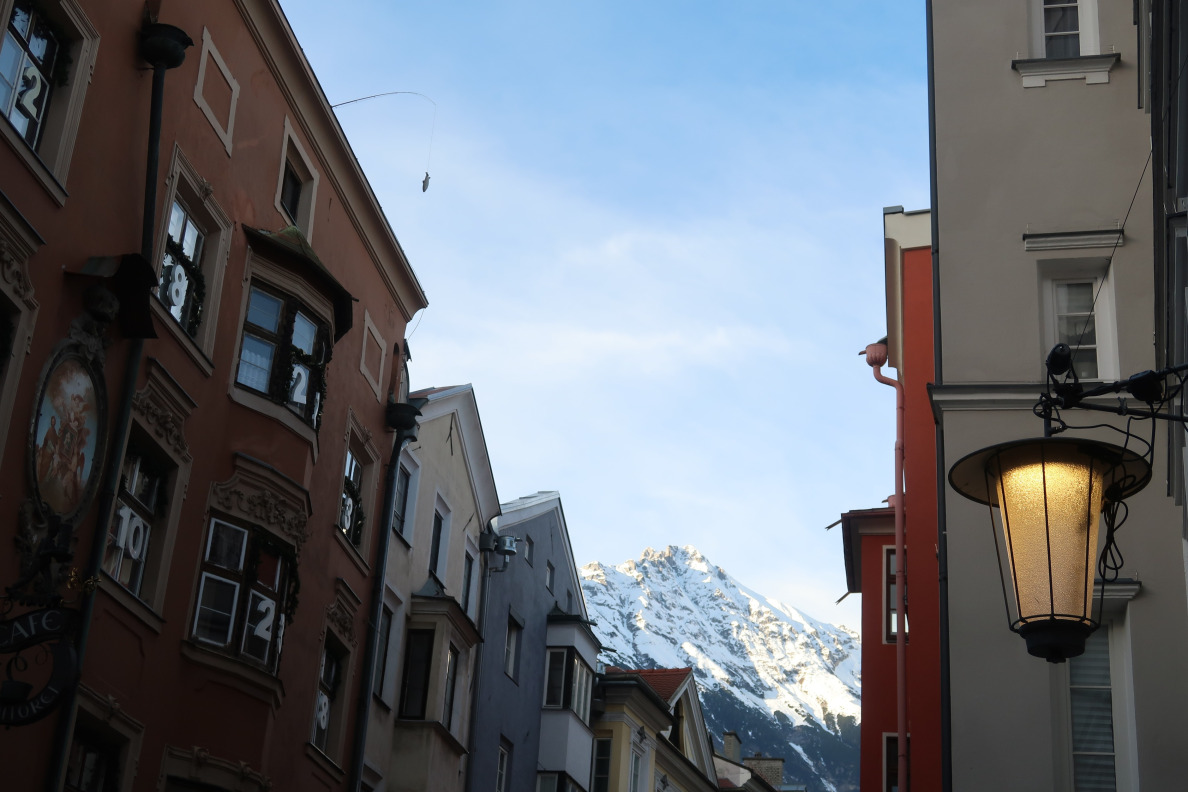
A Mountain City Break:
Innsbruck

There are very few places on this planet where you can have breakfast in a chic hotel, do a spot of shopping, hop on a funicular to fit in some skiing, visit a palace and then see a show at the theatre, all in one day. If you’re into snowsports, if you’re into vibrant cities, if you’re into somewhere surrounded by snowy mountains, then Innsbruck should be on your list of places to visit.
Words and photography by Olly Beckett
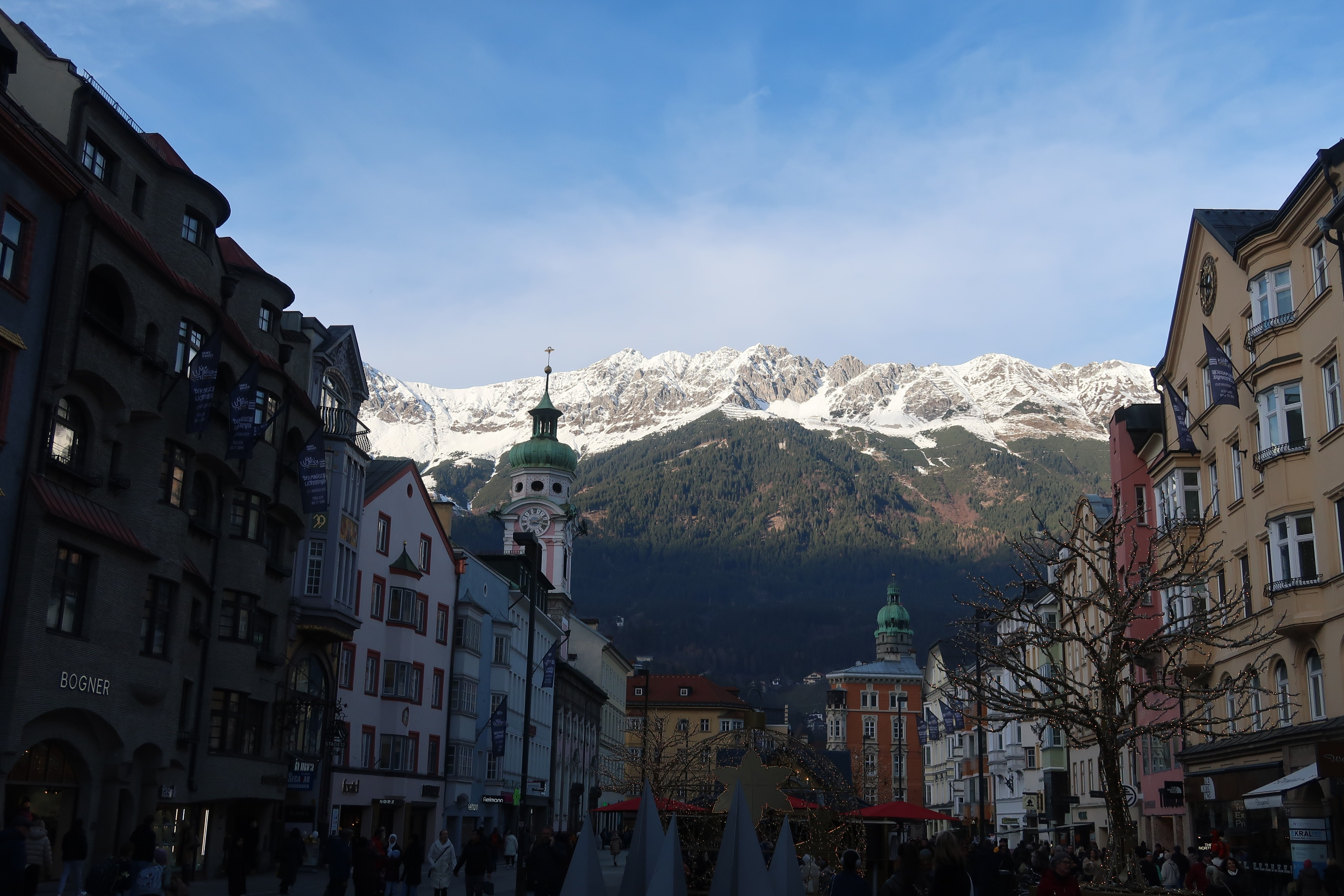
I stayed at Stage 12 hotel (rooms from €180) which is smack dab in the centre of Innsbruck. Opening the curtains in the morning and being greeted by the Tyrolean Alps was a special event, every day. Today I was in the mood for some culture and so made a beeline for the Hofburg Palace. Built from 1460 and expanded over the following 250 years, the palace reflects the Habsburg Empire’s wealth. The Giants’ Hall is immense and tastefully ornate. Maria Theresia – sole child of Charles IV – became the Habsburg ruler in 1740 and, due to her father issuing an edict stating that a daughter could inherit the empire, instead of other, less well-connected, male heirs. Instead of lining the Giants’ Hall with portraits of forefathers, she instead filled this impressive room with paintings of her 16 children.
Beyond that vast hall are a series of yet more tastefully – and expensively – decorated rooms. The Habsburgs didn’t ever rule from this place, this was where they stayed when visiting from Vienna. Whenever they visited they took a large collection of furniture with them, therefore, when the Empire died in 1780, the furniture remained in Vienna, leaving the Hofburg Palace bereft of beds and chairs and tables.
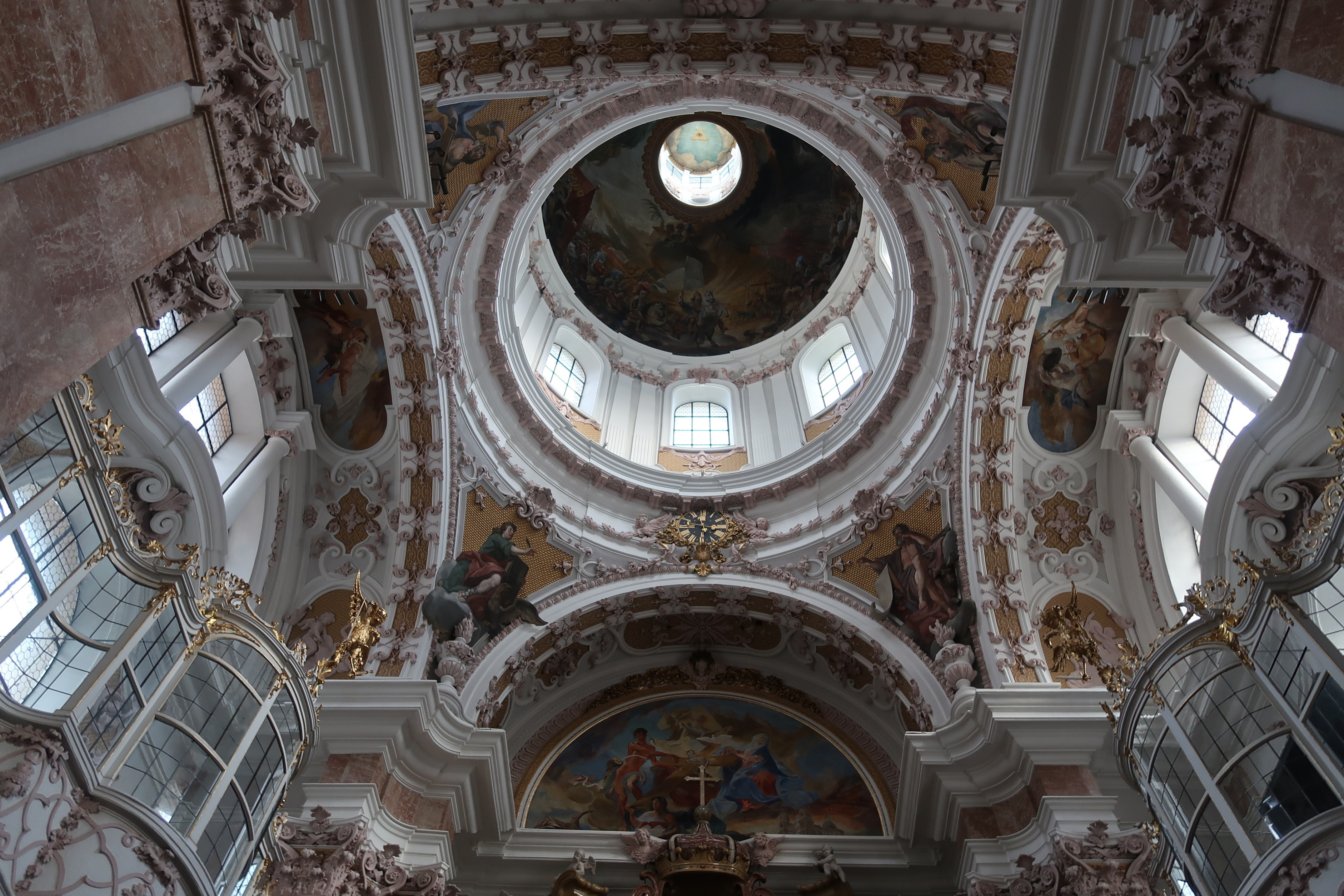
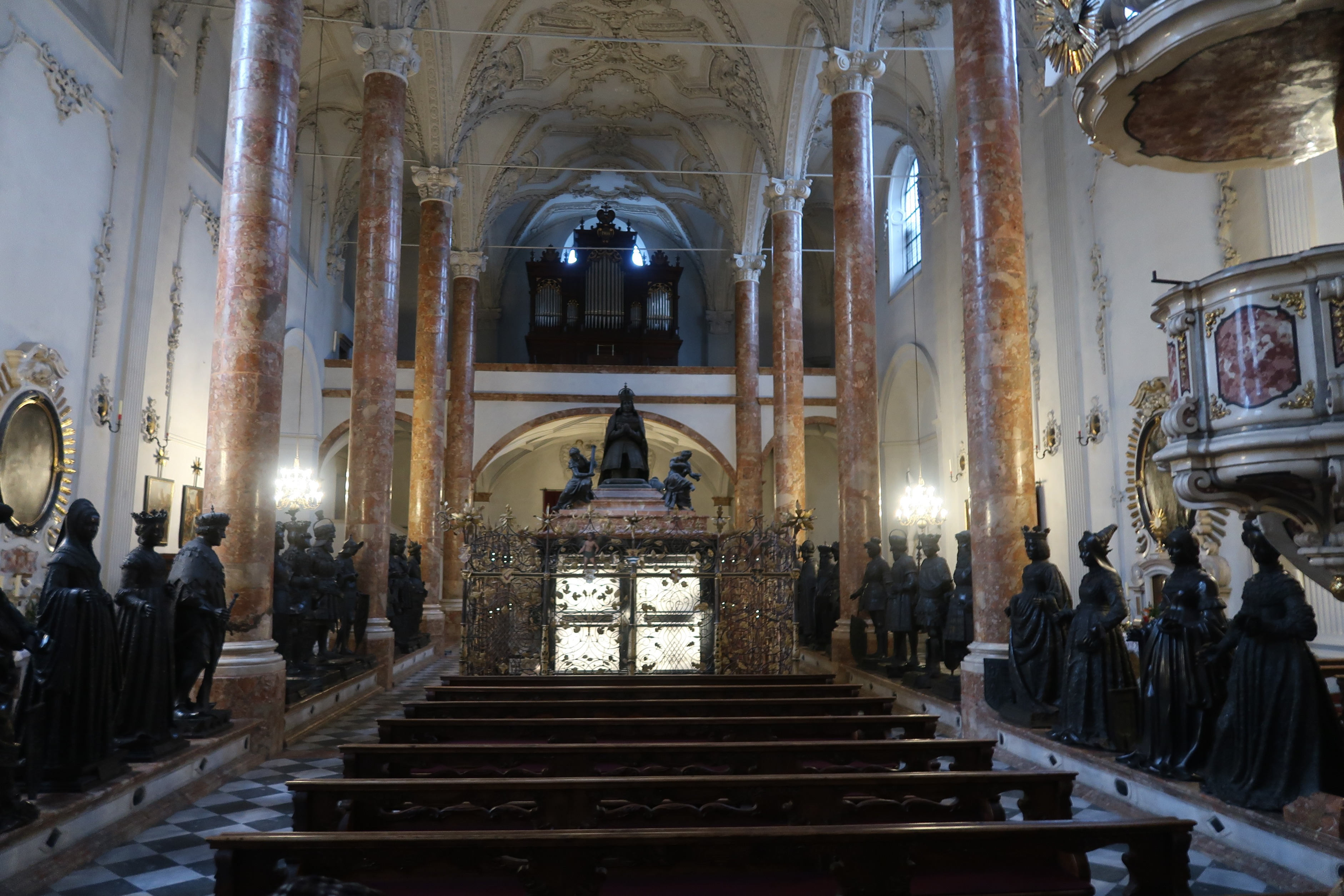
Sometimes, when visiting a place, you meet someone who is the living embodiment of that place. In Innsbruck that person was my guide, Monica, whose family built the Grassmayr bell foundry in 1599 and even to this day they run it in the same location, casting bells weighing up to 26 tons. Monica’s knowledge of Innsbruck is encyclopedic, after guiding me through the palace we go across the road to Hofkirche. My favourite place in this church/museum complex was the church itself, where the kings of Europe line a wide nave. In the centre is an ornate tomb where Emperor Maximilian’s remains were supposed to have been interred (instead they went to Vienna).
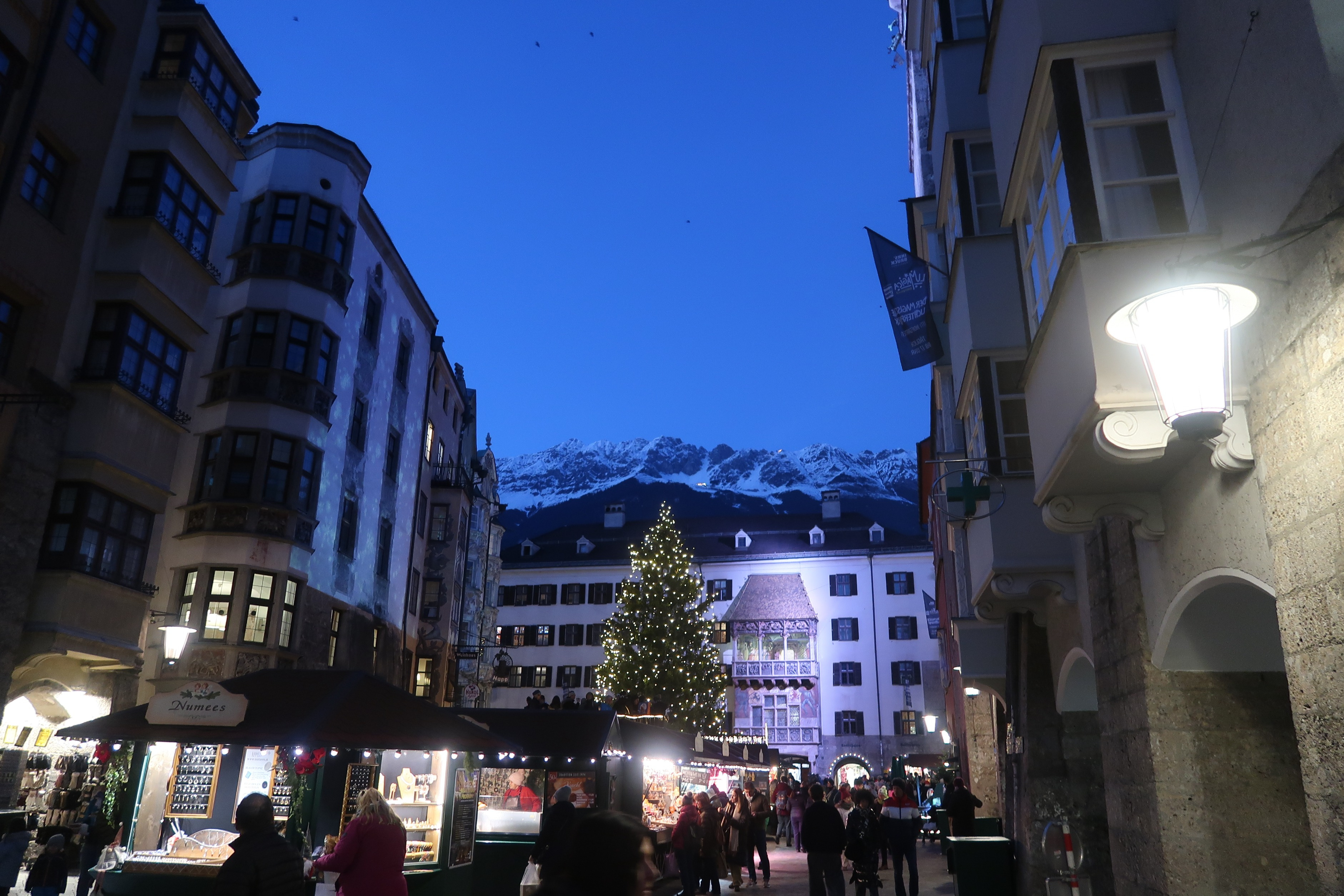
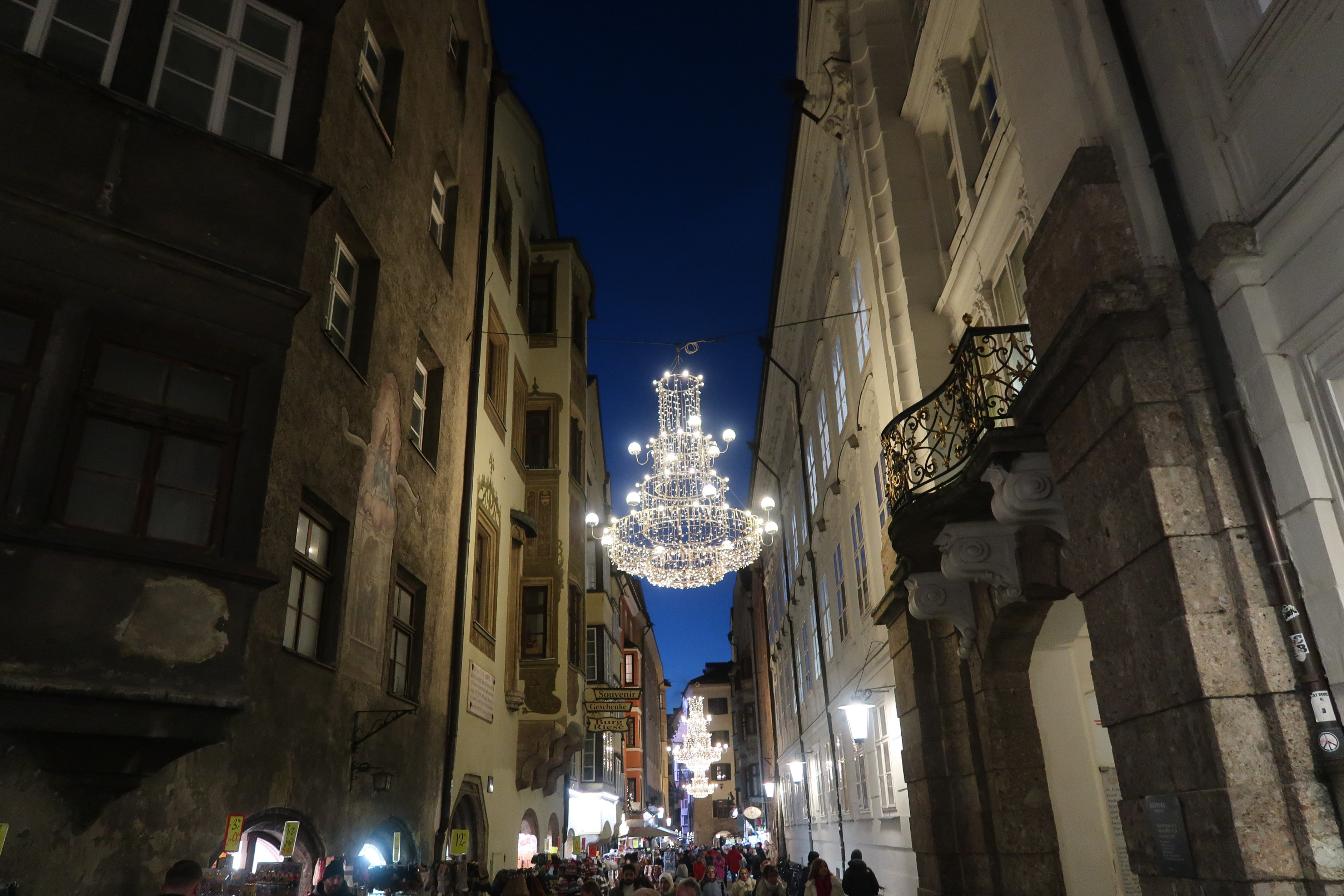
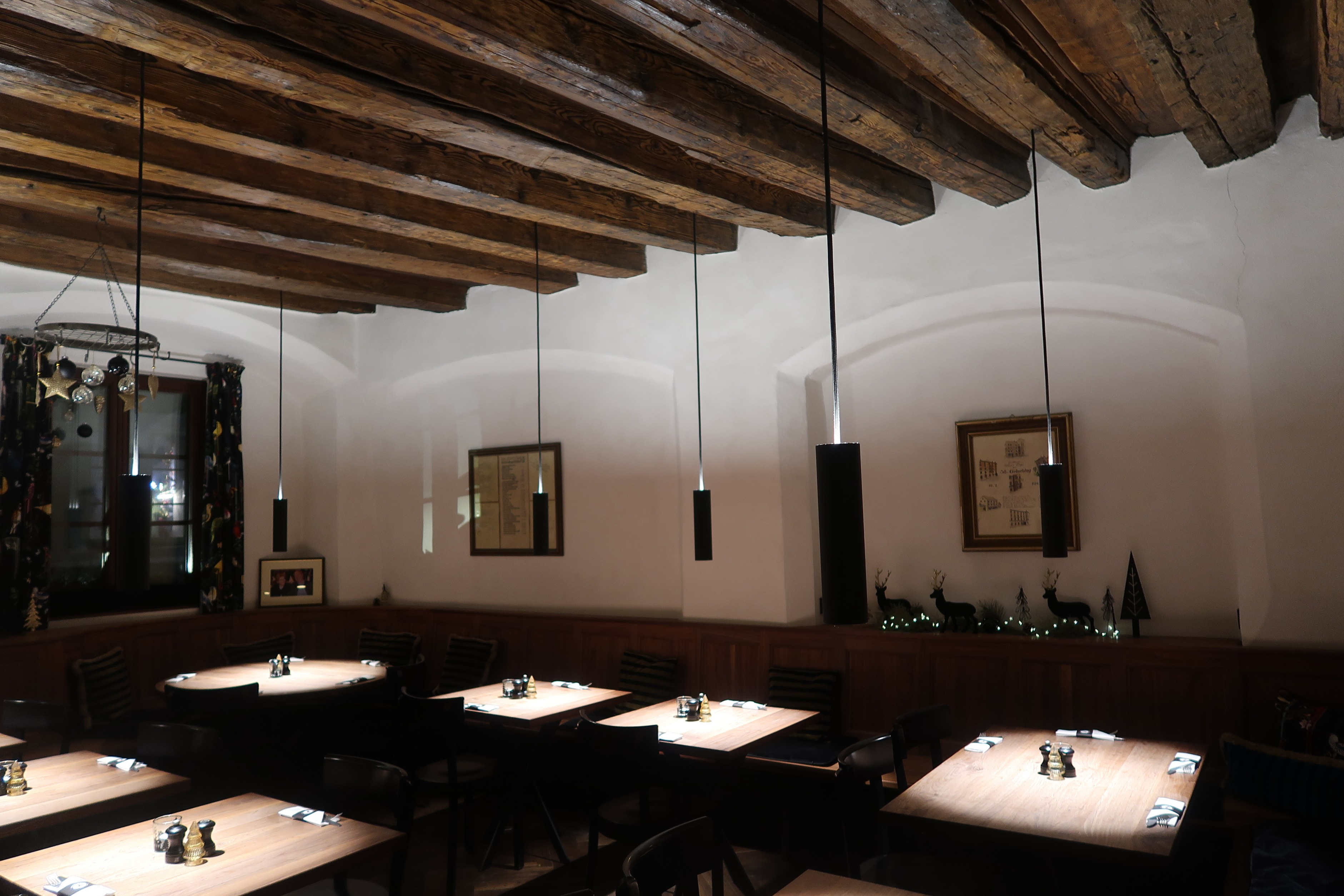
Dinner was at the Weisses Rössl hotel restaurant, perfectly located steps from the Golden Roof in Old Town (Altstadt). The roof consists of 2,657 gilded tiles, created for Emperor Maximilian I in 1500, but the excellent value (Wiener schnitzel with potato salad just €19.90) and supremely tasty food in the restaurant proved far more distracting. Friendly hospitality has been served here for over 600 years and, somewhere in the building (I couldn’t find it) a wooden beam bears the year 1292.
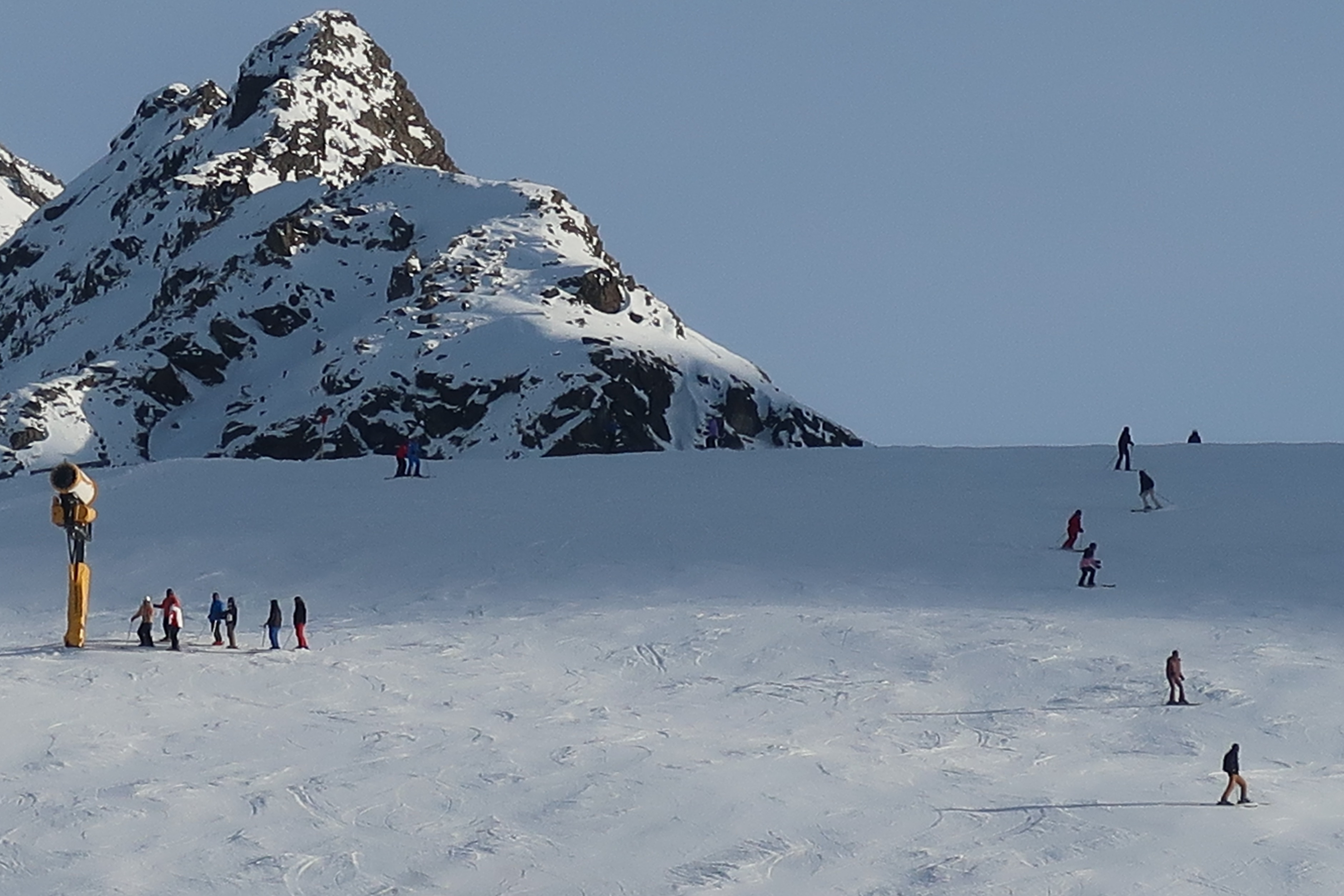
When in Innsbruck you’re right in the mountains. The city itself is 574m above sea level, but it’s surrounded by peaks rising to 2,644m. Those peaks are on the very edge of the city and all it takes to get on to one of the ranges is a simple combined funicular and cable car journey. From downtown Innsbruck to the snowy landscape of 2,269m Hafelekar mountains takes less than 30 minutes. Locals even come here to get in a quick bit of skiing during their lunch break.
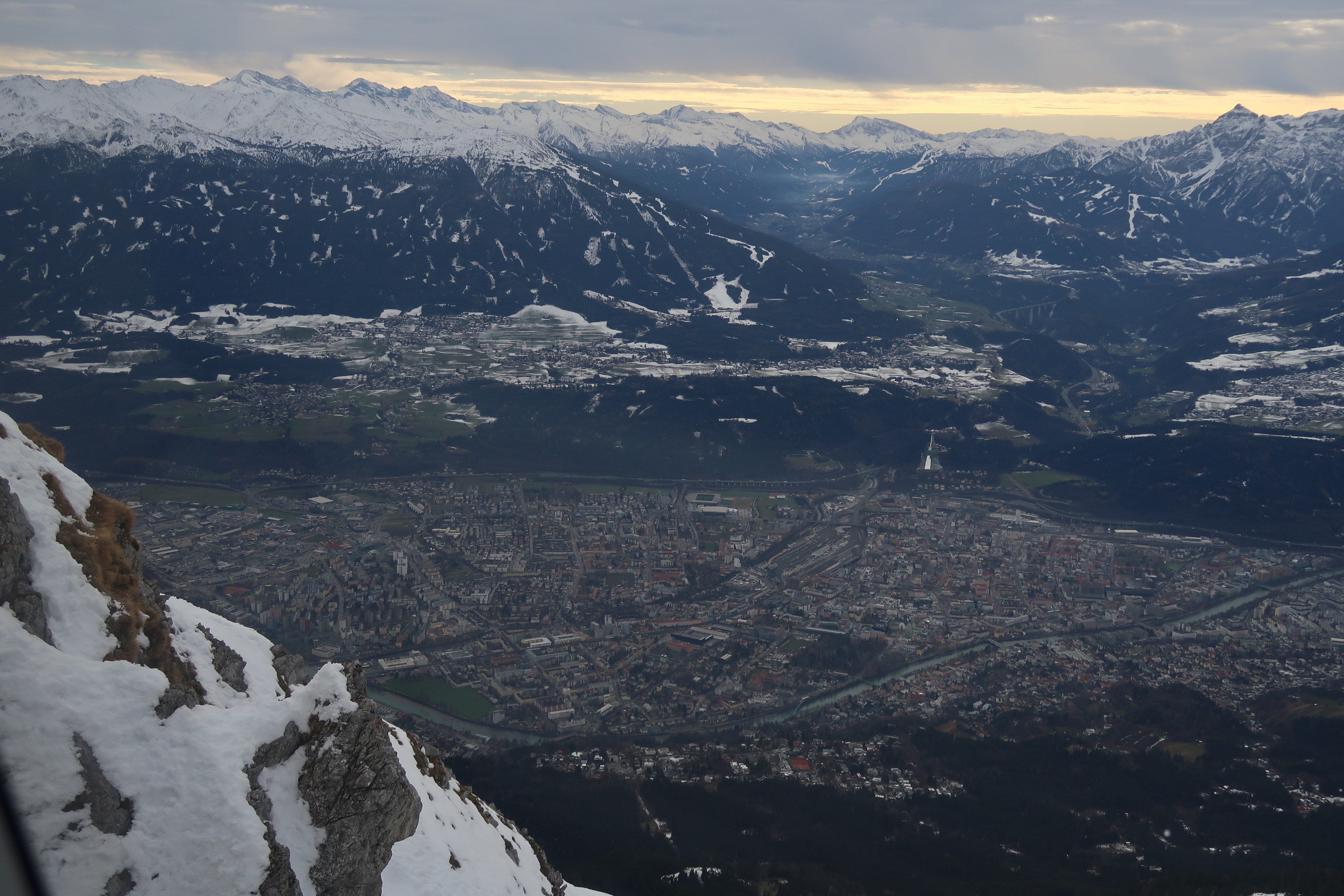
It’s fun to peer back down to the city and spot some of the landmarks. If you’re feeling fit then you can walk 15 minutes to the top of Hafelekarspitze (it was a bit icy when I visited in December), or you can make a much briefer walk to a research station once used by Victor Franz Hess to identify solar rays, a discovery which earned him the Nobel Prize. From this research station you can look down into perfectly wild Karwendel Nature Park.
The funicular stations of the Hungerburgbahn were designed by Zaha Hadid, as was the nearby Bergisel Ski Jump which I also paid a visit to. That visit started off sedately with a delicious breakfast in the Bergisel SKY restaurant which has lofty views of the city and the mountains beyond. Trying not to think of that breakfast as my final meal, I then headed down to the top of the ski jump where I met Thomas Hofer, who once took part in international competitions of this, frankly, bonkers sport. Thomas helped me into a safety harness, a necessary precaution considering the sharply-sloped 98-metre-long run. Over that run a ‘shaking beam’ is extended for athletes to begin their jump and for tourists to terrify themselves on.
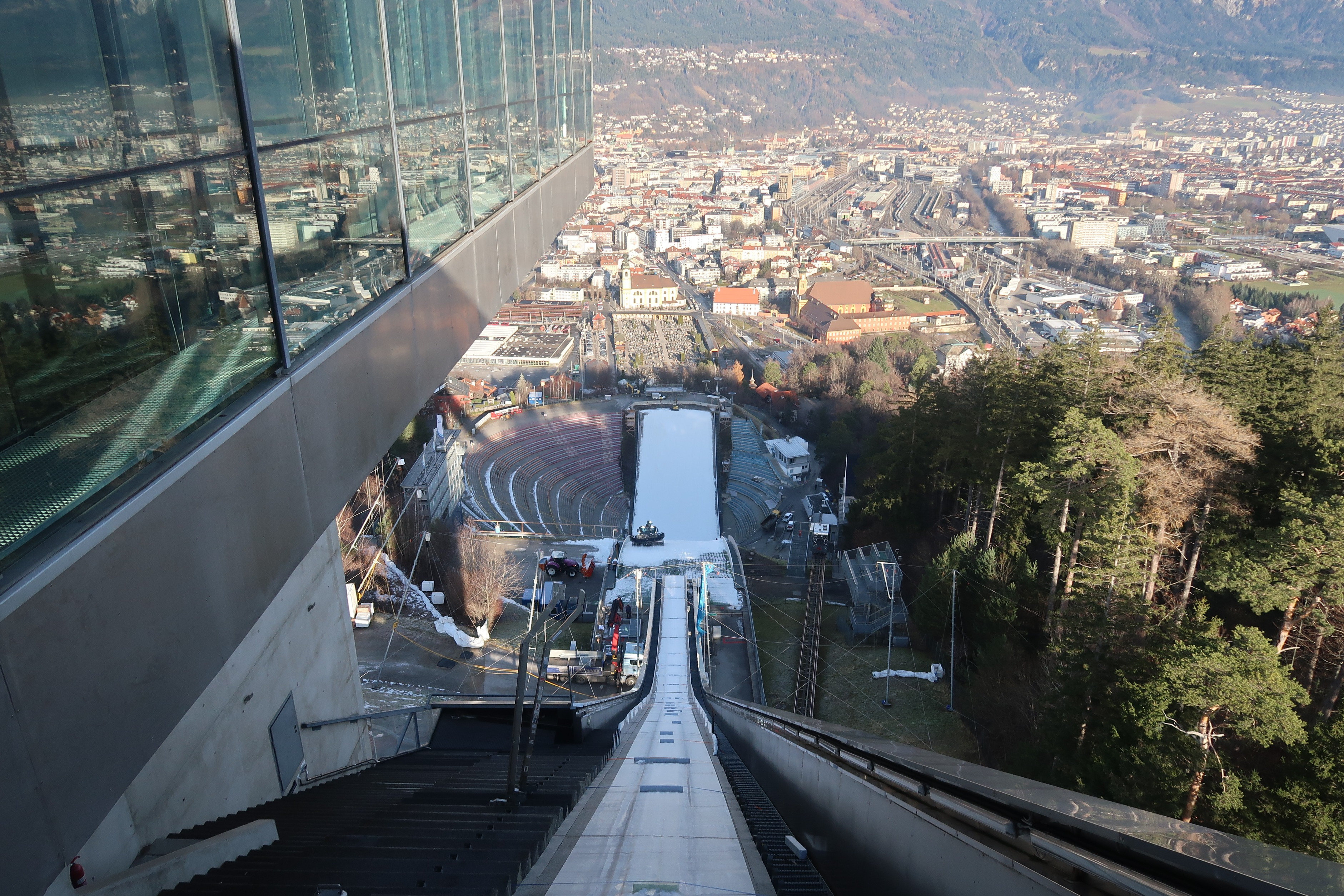
I took the more sedate lift-and-funicular option of returning to the ground. Bergisel is easily accessed via the nearby Wilten Abbey tram stop or on the Sightseer Bus. Public buses run throughout the city and beyond, I recommend buying a 24-hour ticket for €7. This will give you access to places further afield such as the mountain town of Kühtai where in winter there’s a rich choice of ski slopes, as well as scenic restaurants such as Kühtaier Dorfstadl (which serves the largest slices of sacher torte I ever did see).
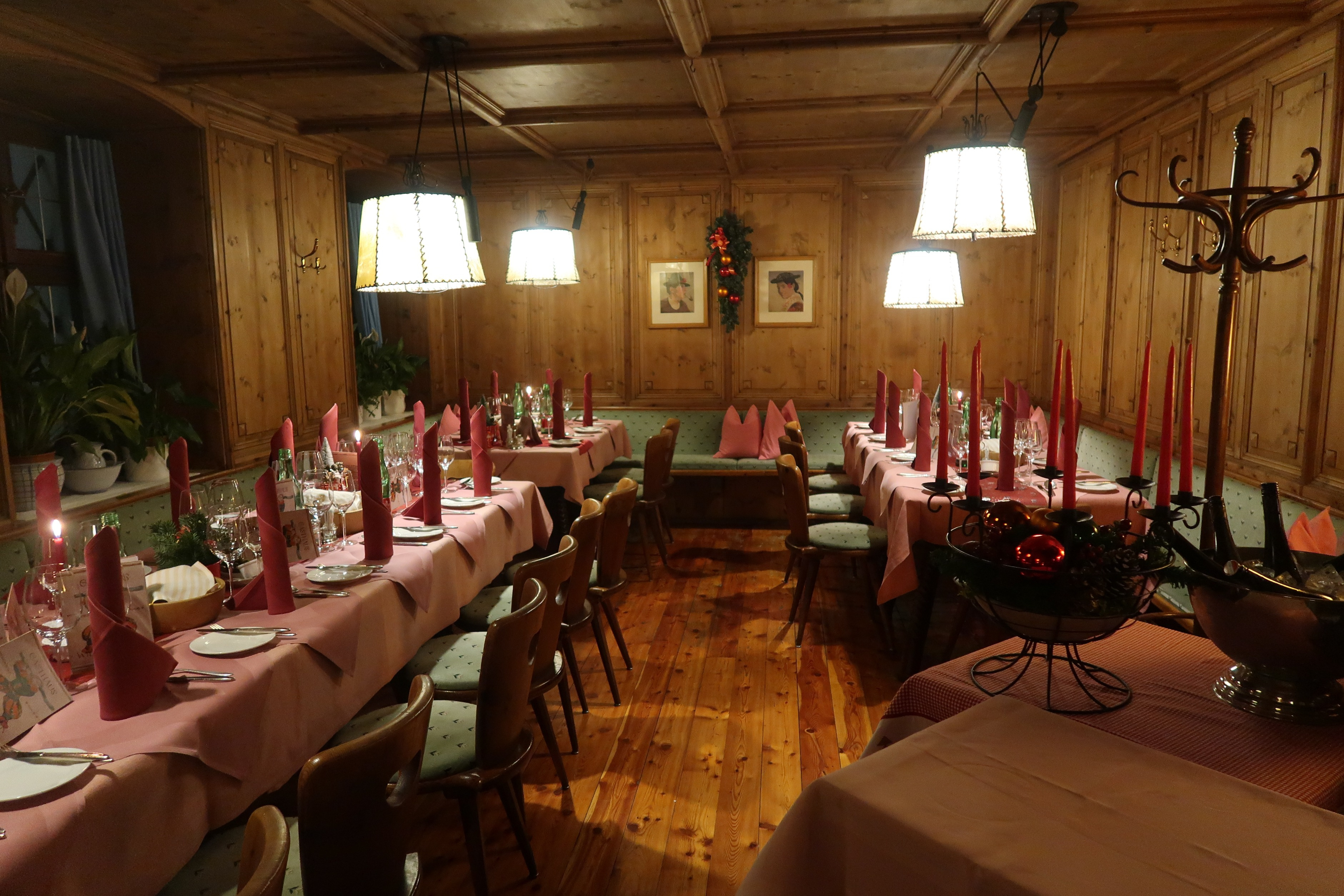
Another evening and another hearty Tyrolean meal, this time in the village of Lans that overlooks the city. It was winter dark when we arrived, accentuating the cosiness of softly lit Wilder Mann restaurant. Food has been served here since the Middle Ages when people travelled along the nearby Roman road. When prepared well and using the best ingredients, Austrian food can be a tastebud treat and the several dishes I tried at Wilder Mann proved to be among the very best I’ve had in the country.
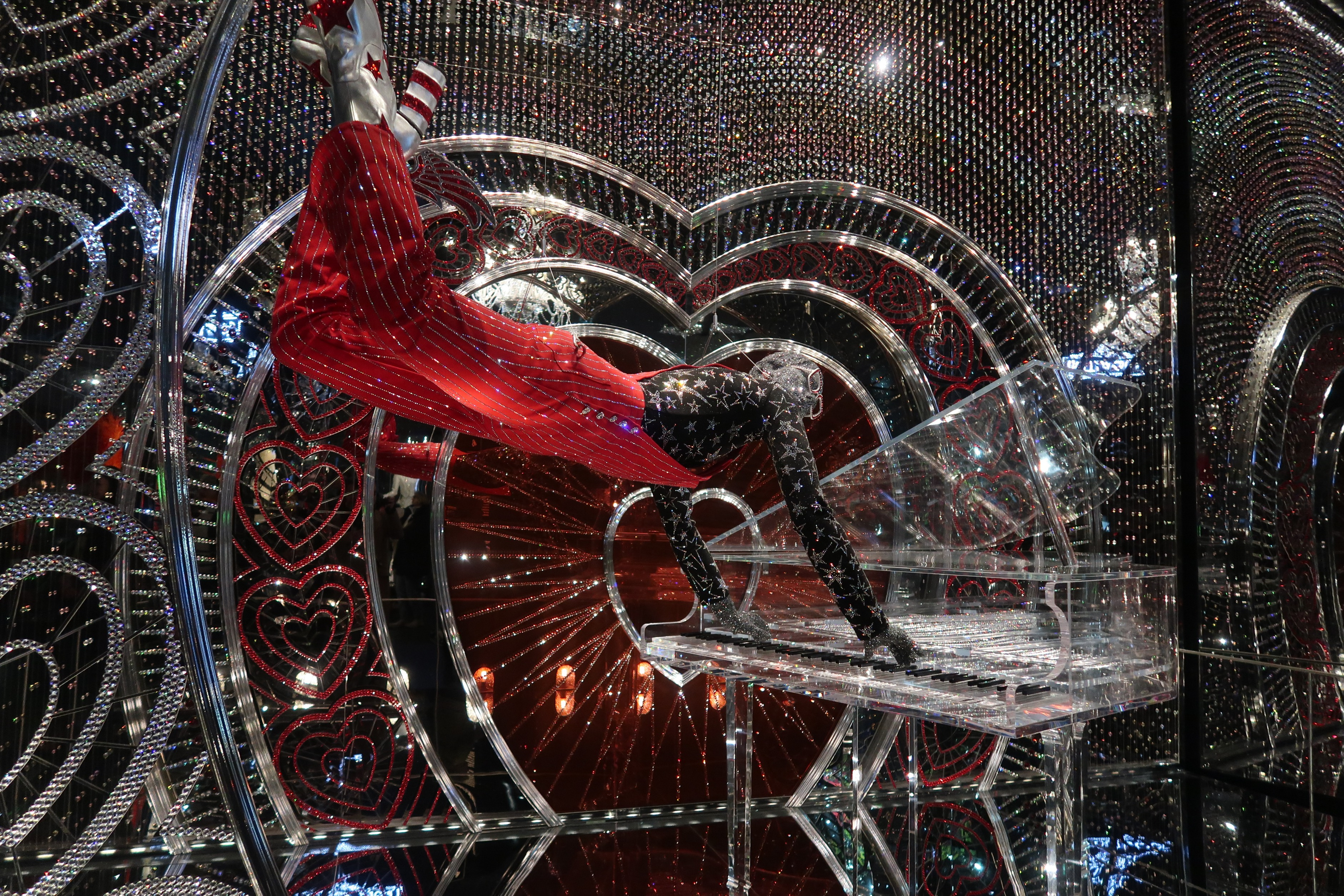
For €12 you can take one of the five daily shuttle buses to Swarovski Kristallwelten, a surprisingly enchanting place with imaginative rooms decorated in a wide variety of styles, all using many, many thousands of Swarovski crystals. There’s also Swarovski crystal art, Swarovski crystal clothing worn by famous people including Elton John and Katy Perry, and a Swarovski crystal shop selling all sorts of bedazzling items. The on-site Daniels restaurant serves delicious cuisine and is surprisingly excellent value.
There was one more place on my ‘must-see’ list. Ambras Castle was built in 1563 for Emperor Ferdinand I’s wife Philippine Welser. Like their marriage, the castle is humble and understated, at least on the outside. On the inside there are vast rooms filled with armour or, in what is believed to be the first museum in the world, curious artifacts from around the world. The Spanish Hall is worth the entry price (€16 when bought online) alone. It’s a 43-metre long hall along the side of which Tryolean rulers peer down at you from their painted portraits. The ornate ceiling is five metres high and it’s easy to imagine the grand events which must have taken place – and still do take place – here.
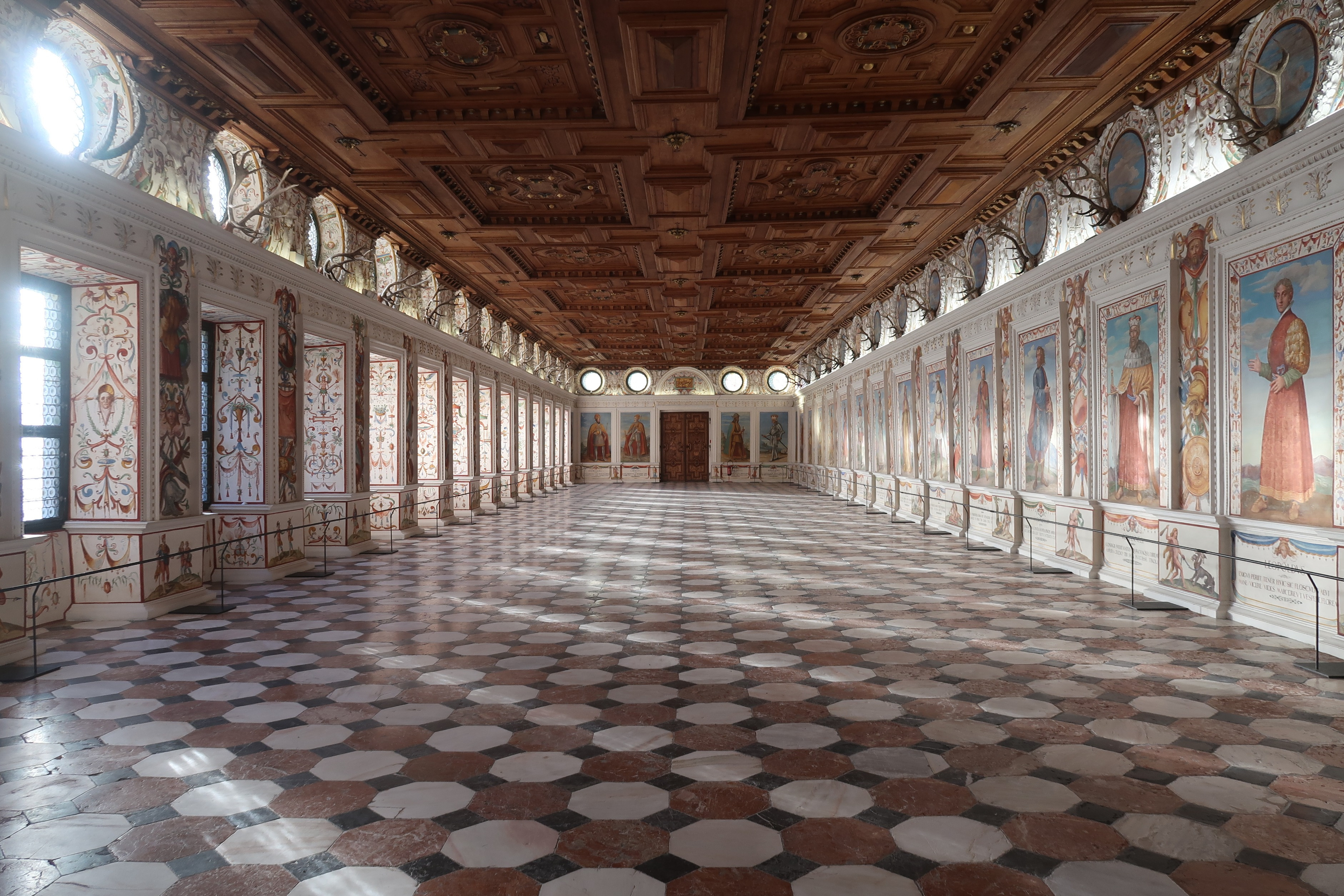
Ambras Castle is also accessible via public transport. During my time in Innsbruck I came to appreciate just how easy it is to get to all the sights in and around the city. I’d no idea quite how much history was in evidence here, nor how good value everything is. For a city break right in the very heart of the mountains it’s hard to beat.
USEFUL RESOURCES
- Stage 12 Hotel booking
-
Innsbruck Card which gives access to all the sights mentioned above, free public transport and limited rides on cable cars, from €69
-
Weisses Rössl restaurant
-
Wilden Mann restaurant

Watch a short video of the approach to Innsbruck Airport on the Mountains Magazine Instagram channel.